
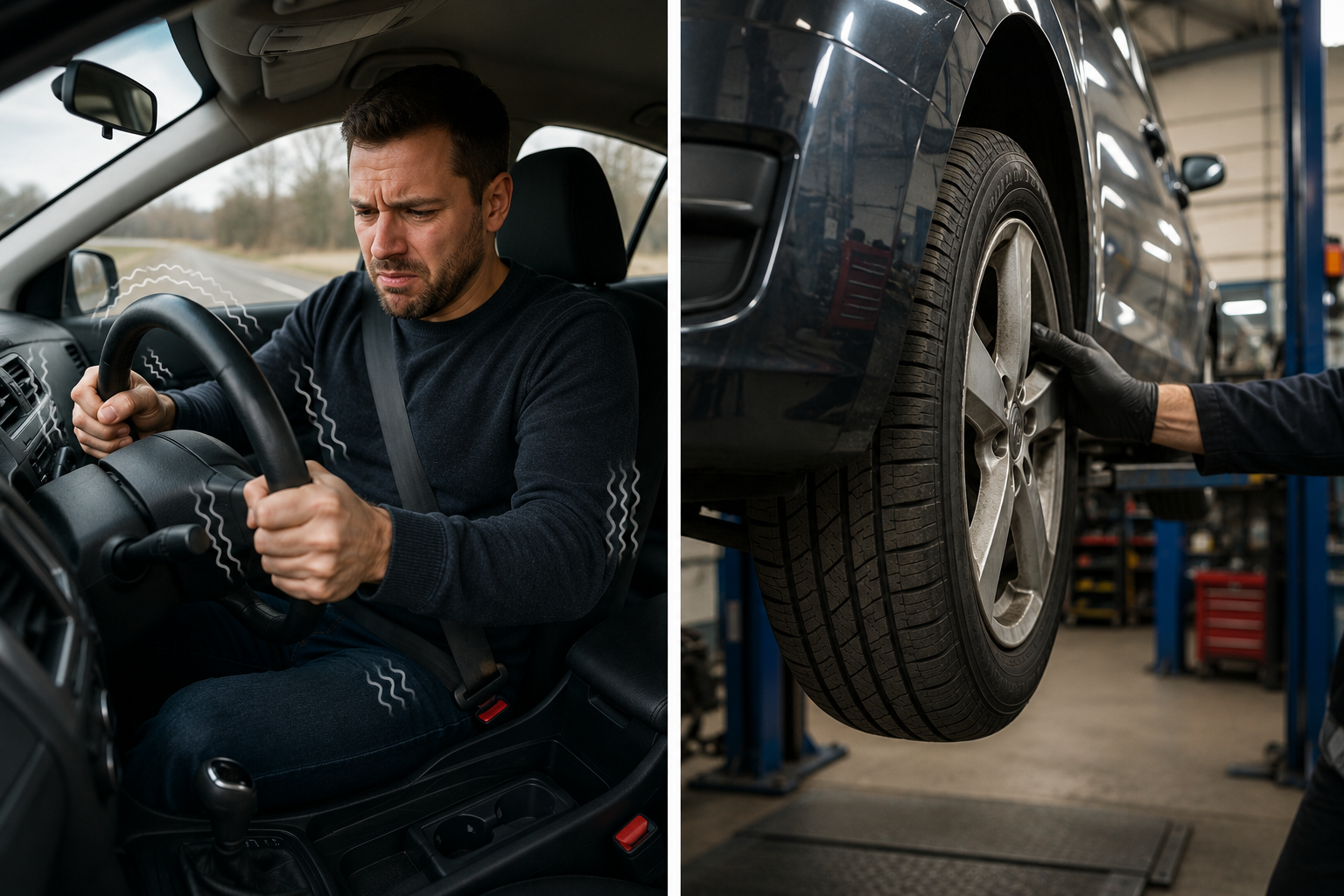
If your car suddenly starts shaking while driving, idling or braking, it’s important not to ignore it. A vibration may be caused by something simple like an unbalanced tyre, or it could point to a more serious mechanical issue such as worn suspension, faulty brakes or engine problems. The key is identifying when the shaking happens, because that often reveals the likely cause. In this guide, you’ll learn the 15 most common reasons a car shakes, how to recognise the warning signs and when it’s time to have your vehicle inspected.
Does It Matter When the Shaking Happens?
Yes, timing is one of the most useful clues you have. Shaking that happens only at idle points toward a different cause than shaking that only appears at motorway speeds, or only when you brake. Before running through the full list, it helps to notice a few basics, does the car shake standing still or only moving, does it get worse with speed, and does it happen every time or only occasionally. Keeping these details in mind will make it much easier to match your symptoms to the right cause below.
The 15 Most Common Causes of Car Shaking
1. Unbalanced Tyres
Unbalanced tyres are one of the most common reasons a car begins to shake, especially when travelling at motorway speeds. Even a small imbalance in the weight of a wheel can create a noticeable vibration because each wheel rotates hundreds of times every minute. As your speed increases, that slight imbalance becomes more obvious, often causing the steering wheel, seats or even the entire vehicle to vibrate.
Most drivers first notice the problem between 50 and 70 mph, although the exact speed can vary depending on the vehicle. The vibration is usually smooth and rhythmic rather than sudden, and it often disappears again as you slow down. Ignoring the issue can lead to uneven tyre wear and place additional strain on suspension and steering components over time.
If your steering wheel shakes consistently at higher speeds, having your wheel balanced is usually one of the first and most effective diagnostic steps. Correctly balanced wheels improve driving comfort, help tyres wear evenly and reduce unnecessary stress on other parts of the vehicle.
2. Wheel Alignment Issues
Incorrect wheel alignment can also cause your car to vibrate, although the symptoms are often slightly different from tyre balancing problems. Instead of a rhythmic vibration, you may notice the vehicle drifting to one side, the steering wheel sitting off-centre or uneven tyre wear developing over time.
Alignment problems commonly occur after hitting a pothole, clipping a kerb or driving over rough roads. Even a relatively minor impact can alter the angle of your wheels enough to affect how the tyres meet the road surface. As the tyres begin wearing unevenly, the vibration often becomes more noticeable.
Besides making the car less comfortable to drive, poor alignment can shorten tyre life and reduce handling, particularly in wet conditions. If you’ve recently noticed your vehicle pulling left or right or the steering no longer feels centred, booking a professional wheel alignment inspection can quickly identify whether alignment is contributing to the problem.
3. Worn or Damaged Tyres
Tyres that are worn unevenly, have flat spots, internal belt damage or visible sidewall bulges can all create vibrations while driving. Unlike balancing problems, tyre damage often causes the shaking to become progressively worse as the tyre continues to deteriorate.
One of the most common warning signs is vibration that appears at certain speeds and gradually becomes more noticeable over several weeks. You may also spot irregular tread wear, cracks in the sidewall or a bulge that indicates internal structural damage. Even if the tyre still holds air, it may no longer be safe to continue driving.
Damaged tyres should never be ignored because they can significantly increase the risk of a blowout, especially during long journeys or motorway driving. Regular tyre inspections help identify problems early, and replacing worn or damaged tyres promptly improves both safety and driving comfort.
4. Warped Brake Discs
If your car only shakes while braking, warped brake discs are one of the first components that should be checked. Over time, repeated heavy braking or excessive heat can cause the surface of the brake discs to wear unevenly. Instead of providing smooth braking, the pads repeatedly grip high and low spots on the disc, creating a pulsing sensation.
Drivers often notice the steering wheel vibrating under braking, while the brake pedal may also pulse beneath their foot. The harder you brake, the more obvious the vibration usually becomes. In some cases, stopping distances may also increase if the braking surfaces have become significantly worn.
Because braking performance is directly linked to vehicle safety, it’s always worth having brake-related vibrations inspected promptly. A professional brake inspection can determine whether resurfacing or replacing the brake discs is the most suitable solution before the problem affects other braking components.
5. Worn Engine Mounts
Engine mounts are designed to secure the engine while absorbing the natural vibrations created during normal operation. As these mounts age, the rubber components can crack, soften or separate, allowing the engine to move more than it should. That additional movement is often felt as a noticeable vibration throughout the vehicle.
Unlike tyre-related issues, worn engine mounts usually cause shaking while the car is stationary, idling at traffic lights or pulling away from a standstill. Some drivers also notice the vibration becoming stronger when selecting Drive or Reverse in automatic vehicles. In more advanced cases, knocking noises may be heard as the engine shifts under load.
Because engine vibrations can sometimes be mistaken for ignition or fuel system faults, a professional inspection is often the quickest way to identify the true cause. Experienced technicians, such as the team at TJ Services Fleet, regularly diagnose vibration issues by systematically checking engine mounts alongside other common causes before recommending the most appropriate repair.
6. Loose or Damaged Drive Shaft
The drive shaft transfers power from the engine and transmission to the wheels, allowing your vehicle to move smoothly. Because it spins continuously while driving, even a slight bend, worn universal joint or damaged constant velocity (CV) joint can create noticeable vibrations that become more severe as speed increases.
Drivers often notice the shaking during acceleration rather than when cruising at a steady speed. In some cases, the vibration may start subtly before becoming more pronounced over time, particularly if the damage was caused by striking a deep pothole or driving over rough road surfaces. A clunking noise when changing gear or accelerating may also accompany the vibration.
Since drive shaft problems can place additional stress on other drivetrain components, they should be inspected as soon as possible. Continuing to drive with a damaged drive shaft can eventually lead to more expensive repairs or even complete drivetrain failure.
7. Faulty Spark Plugs or Ignition Coils
Your engine relies on spark plugs and ignition coils to ignite the air and fuel mixture inside each cylinder. If one or more cylinders misfire because of worn spark plugs or a faulty ignition coil, the engine can no longer run smoothly, resulting in noticeable shaking, rough idling and reduced performance.
This type of vibration is usually most obvious while the car is stationary or when accelerating from low speeds. Drivers may also notice sluggish acceleration, poor fuel economy, hesitation under load or an illuminated engine management light. Because several different engine faults can produce similar symptoms, guessing the cause often leads to unnecessary parts being replaced.
Modern vehicles can quickly identify ignition faults through onboard diagnostics. If your vehicle is shaking alongside a warning light or reduced performance, booking an engine diagnostics check can help pinpoint the exact fault before it develops into a more costly repair.
8. Timing Chain Problems
The timing chain keeps the engine’s internal components perfectly synchronised, ensuring the valves and pistons operate at precisely the right moment. As the chain stretches through normal wear or its tensioner begins to fail, the engine’s timing can become inaccurate, leading to rough running, increased vibration and reduced performance.
One of the earliest warning signs is often a rattling noise during cold starts, followed by intermittent shaking at idle or during acceleration. In some vehicles, the engine management light may also appear, while fuel economy and engine responsiveness gradually decline. Left untreated, excessive timing chain wear can eventually result in serious engine damage.
Although timing chain problems are less common than tyre or suspension issues, they are among the most important to diagnose early. Addressing the problem before the chain slips or fails completely can prevent extensive engine repairs and significantly reduce overall repair costs.
9. Clogged Air Filter or Fuel Injectors
A healthy engine depends on the correct balance of air and fuel. When the air filter becomes heavily clogged or fuel injectors begin to accumulate deposits, that balance is disrupted, causing the engine to run less efficiently. As combustion becomes inconsistent, drivers may begin to notice rough idling, hesitation during acceleration or a subtle vibration throughout the vehicle.
Unlike sudden mechanical failures, these issues usually develop gradually, making them easy to overlook. You may also notice reduced fuel economy, sluggish throttle response or a slight loss of engine power before the shaking becomes more noticeable. Diesel vehicles can sometimes produce darker exhaust smoke if fuel delivery becomes increasingly restricted.
Routine car servicing plays an important role in preventing these problems by replacing filters, checking ignition components and identifying early signs of wear before they affect drivability. Keeping up with scheduled maintenance not only helps reduce vibration issues but also improves fuel efficiency and long-term engine reliability.
10. Loose Wheel Nuts
Loose wheel nuts are one of the least common causes of vehicle vibration, but they are also one of the most dangerous. If wheel nuts have not been tightened correctly after tyre replacement or wheel repairs, the wheel can begin moving slightly against the hub. This movement creates a wobbling sensation that often becomes progressively worse the further you drive.
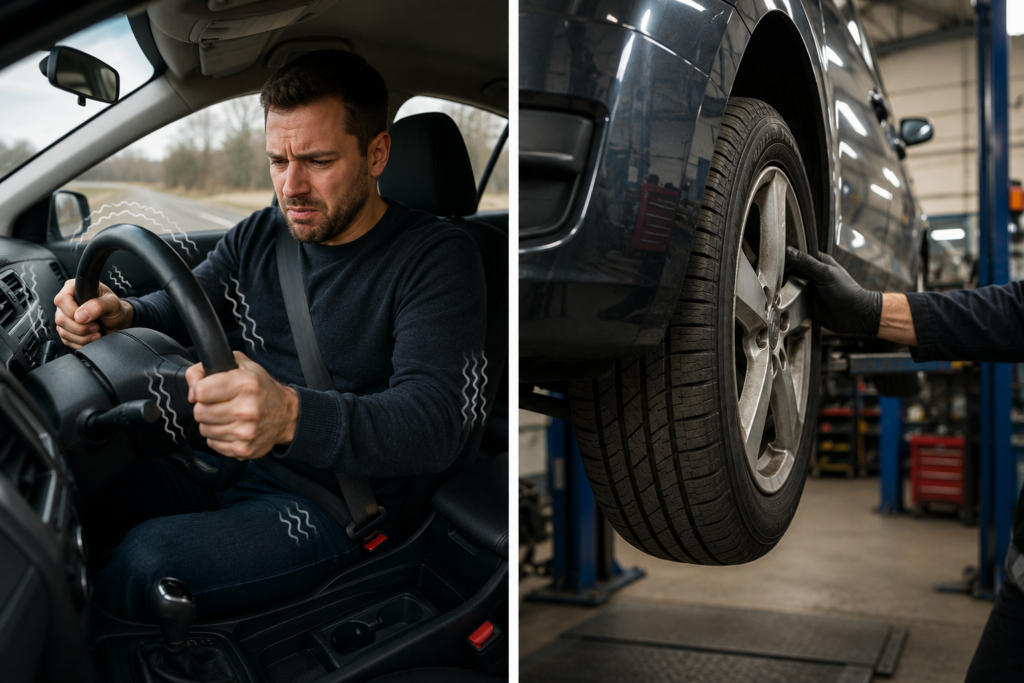
Drivers may notice an unusual vibration shortly after recent tyre work, particularly at moderate speeds. In severe cases, knocking noises may also be heard as the wheel shifts against the mounting surface. Continuing to drive under these conditions significantly increases the risk of wheel damage and, in extreme cases, complete wheel separation.
If you suspect loose wheel nuts, stop driving as soon as it is safe to do so and have the vehicle inspected immediately. This is not a fault that should be monitored or ignored, as it directly affects the safe operation of your vehicle.
One mistake many drivers make is assuming every vibration is caused by the tyres. While tyres and wheels are responsible for many shaking complaints, experienced technicians follow a systematic inspection process that also includes the braking system, suspension, steering, drivetrain and engine components. Looking at the complete picture often leads to a faster and more accurate diagnosis while avoiding unnecessary repairs.
11. Worn Suspension Components
Your suspension system is responsible for keeping the tyres firmly in contact with the road while absorbing bumps and maintaining vehicle stability. As components such as shock absorbers, coil springs, control arm bushes and ball joints wear over time, the vehicle may begin to feel unstable, particularly on uneven roads. Instead of absorbing road imperfections smoothly, worn suspension parts allow excessive movement that can be felt as vibration or shaking through the steering wheel or the entire vehicle.
Unlike tyre balancing problems, suspension-related vibrations often become more noticeable when driving over potholes, speed bumps or rough road surfaces. Drivers may also hear knocking or clunking noises, notice uneven tyre wear or feel that the vehicle leans excessively when cornering.
Because suspension problems affect handling, braking and tyre wear, they should not be ignored. Early diagnosis often prevents additional damage to steering and tyre components while helping maintain a safer and more comfortable driving experience.
12. Faulty CV Joints
Constant Velocity (CV) joints allow power to reach the wheels while still letting them turn and move with the suspension. They are protected by rubber boots filled with grease, but if these boots split or become damaged, dirt and moisture can enter the joint, causing it to wear much more quickly.
One of the first signs of a worn CV joint is a clicking noise when turning at low speeds, particularly when pulling out of parking spaces or making tight turns. As the wear becomes more severe, drivers may also notice vibration during acceleration, especially when pulling away from a standstill. Ignoring the problem can eventually result in complete joint failure, leaving the vehicle unable to drive.
Since CV joints rarely repair themselves, replacing worn components early is usually the safest and most cost-effective solution before further drivetrain damage occurs.
13. Exhaust System Damage
Although many drivers associate vibrations with the engine or wheels, a damaged exhaust system can also create noticeable shaking. Loose mounting brackets, worn rubber hangers or damaged heat shields may allow the exhaust to move more than intended, producing vibrations that can often be felt through the floor of the vehicle.
These vibrations are usually most noticeable while idling, when starting the engine or driving over uneven surfaces. Drivers may also hear metallic rattling noises underneath the vehicle, particularly during acceleration or when the engine speed changes.
Because several different faults can produce similar symptoms, an inspection is the best way to determine whether the vibration originates from the exhaust system or another mechanical component. Addressing loose exhaust parts early often prevents additional wear and eliminates unnecessary noise before it becomes a larger repair.
14. Transmission Problems
For vehicles with automatic transmissions in particular, gearbox problems can sometimes cause a noticeable shudder during acceleration or while changing gears. As transmission fluid ages or internal components begin to wear, gear changes may become less smooth, creating vibrations that are sometimes mistaken for engine or tyre faults.
Drivers may notice hesitation when accelerating, delayed gear engagement, jerky shifting or vibrations that only occur at specific speeds. In some cases, the transmission warning light may also appear, indicating that further investigation is required.
Because transmission repairs can become expensive if problems are left unresolved, identifying early warning signs is important. Regular servicing and checking transmission fluid at the recommended intervals can help extend the life of the gearbox and maintain smoother performance.
15. Wheel Bearing Wear
Wheel bearings allow each wheel to rotate smoothly while supporting the vehicle’s weight. As they wear, friction increases, often creating a humming or grinding noise that gradually becomes louder with speed. Unlike tyre noise, the sound may change when steering left or right because the vehicle’s weight shifts from one side to the other.
As the bearing continues to deteriorate, drivers may begin to notice vibration through the steering wheel or the vehicle floor, particularly at motorway speeds. In severe cases, excessive movement within the bearing can affect wheel alignment and handling, making the vehicle feel unstable during cornering.
A worn wheel bearing is considered a safety-critical fault because complete failure can result in loss of wheel control. Having unusual humming noises or persistent vibration inspected early helps prevent more extensive repairs and keeps the vehicle safe to drive.
Shaking at Idle Versus Shaking While Driving
It is worth separating these two scenarios, as they tend to point toward different causes.
Shaking primarily at idle often relates to the engine itself, such as worn mounts, faulty spark plugs, a clogged filter, or exhaust mounting issues. Shaking that appears or worsens while driving, particularly at specific speeds, more often points toward tyres, wheels, brakes or drivetrain components.
Braking specific shudders almost always relate to warped discs, while turning specific vibration or clicking usually points to CV joints. Noting exactly when the shake happens narrows the list considerably before any inspection even begins.
When Shaking Becomes a Safety Concern
Some causes are more urgent than others, and a few genuinely should not be driven on.
- Loose wheel nuts require immediate attention, do not continue driving.
- A humming or grinding noise alongside vibration, suggesting a wheel bearing fault, should be checked promptly.
- Shaking that is getting rapidly worse over a short period of time is generally a sign of something progressing, rather than a stable, minor issue.
- Any vibration accompanied by a pulling sensation, reduced braking performance or a warning light should be treated as a priority.
If in doubt, it is always safer to have the car looked at rather than assume the shaking will resolve on its own.
How These Faults Are Diagnosed
Diagnosing the cause of shaking usually starts with the basics, checking tyre condition and balance, inspecting wheel alignment, and looking for obvious damage to the wheels or suspension. If nothing is found at that stage, attention typically moves to the engine, checking mounts, spark plugs, and the timing chain, before finally considering drivetrain components like the drive shaft, CV joints and transmission.
This kind of systematic check is exactly what happens during a proper inspection, which is one of the reasons routine car servicing is so useful for catching these issues before they become more serious. Our guide on what happens during a car service explains this process in more detail, including which of these components are typically checked as standard.
Does an MOT Check for Shaking-Related Faults?
While an MOT is not designed to diagnose vibration specifically, several of the underlying causes, including tyre condition, wheel security, suspension components and exhaust mounting, are checked as part of a MOT test. This means a persistent shake picked up during your annual test can sometimes be traced back to a fault that was already building beforehand, which is another reason not to ignore a vibration simply because the car still drives normally otherwise.
Booking an annual MOT test also provides an opportunity for technicians to identify safety-related issues that could contribute to vehicle vibration.
A Quick Reference Table
The table below groups the fifteen causes by where the shaking is typically felt, to help narrow things down quickly.
| Where You Feel It | Likely Causes |
| Steering wheel, at speed | Unbalanced tyres, wheel alignment, warped discs |
| Whole car, at idle | Worn engine mounts, faulty spark plugs, clogged filter, exhaust damage |
| Brake pedal, when braking | Warped brake discs |
| Increasing with speed | Drive shaft damage, worn tyres, wheel bearing wear |
| When turning | Faulty CV joints |
| During gear changes | Transmission problems |
| General, worsening over time | Worn suspension components, timing chain wear |
What to Do if Your Car Starts Shaking
If shaking appears suddenly or worsens quickly, reduce your speed and, where safe, find somewhere to pull over and take a quick look for anything obvious, such as a damaged tyre or a loose wheel. If nothing is visibly wrong and the shaking is mild, driving cautiously to a garage is usually reasonable. If the vibration is severe, accompanied by unusual noise, or the car feels unstable in any way, it is safer to stop and arrange recovery rather than continue.
How Weather and Road Conditions Can Worsen Shaking
Certain driving conditions do not cause vibration on their own, but they can make an existing fault far more noticeable, or accelerate the wear that leads to one. Cold weather causes tyre pressures to drop, and underinflated tyres are more prone to uneven wear and a slightly different vibration pattern than a properly inflated tyre. Wet or icy roads can also make an existing wheel bearing or suspension fault feel more pronounced, simply because the car has less grip to mask minor imperfections in how it is running.
Poorly maintained roads play a role too. Frequent potholes, broken tarmac and speed bumps place repeated stress on suspension components, drive shafts and wheel alignment. A car that would otherwise run smoothly for years can develop shaking symptoms considerably sooner if it regularly covers rough surfaces. None of this means these conditions are the root cause, but they are worth bearing in mind if a vibration seems to appear only in certain weather or on certain routes, as it may simply be revealing a fault that was already present.
Common Mistakes Drivers Make When Diagnosing Shaking
It is easy to misread the signals a shaking car is giving, and a few assumptions tend to lead people astray. One common mistake is assuming that because the shaking is mild, the cause must also be minor. Wheel bearing wear, for example, often starts subtly and worsens gradually, so a small vibration today does not guarantee a small repair tomorrow.
Another frequent error is focusing only on the wheel where the shaking feels strongest, when the actual cause can sometimes be on the opposite side or further along the drivetrain, particularly with drive shaft or CV joint issues. Vibration can travel through the chassis in ways that are not always intuitive.
Drivers also sometimes attribute shaking to tyre pressure alone and top up the tyres without checking for balance, alignment or damage, which can mean the real cause goes unaddressed for months. Treating the timing and character of the shake as genuine diagnostic clues, rather than guessing based on where it feels strongest, tends to lead to a faster and more accurate answer.
Preventive Habits That Help Reduce Vibration Issues
While not every cause of shaking can be prevented, a handful of simple habits noticeably reduce the likelihood of several of the more common ones. Checking tyre pressure and tread condition monthly helps catch uneven wear before it becomes severe enough to cause vibration. Having wheels balanced and aligned whenever new tyres are fitted, or after hitting a significant pothole or kerb, addresses two of the most frequent causes on this list before they have a chance to develop.
Keeping up with scheduled servicing means engine mounts, spark plugs and drivetrain components are inspected regularly, rather than only being looked at once a symptom appears. It is also worth having wheel nuts checked after any tyre related work, given how serious this particular fault can be if missed. None of these habits eliminate every possible cause of shaking, but together they cover a meaningful share of the fifteen causes outlined in this guide, which makes them a sensible baseline for any driver.
Conclusion
A car that shakes should never be dismissed as simply “one of those things.” While some causes, such as unbalanced tyres, are relatively inexpensive to correct, others can develop into serious safety issues if ignored. Paying attention to when the vibration occurs, whether at idle, during braking, while accelerating or only at higher speeds, provides valuable clues that help narrow down the possible cause.
The good news is that many vibration-related faults can be identified before they become major repairs through routine maintenance and professional inspections. Addressing small problems early often improves driving comfort, reduces repair costs and helps prevent unnecessary wear on other vehicle components.
If you’re experiencing persistent shaking and aren’t sure where it’s coming from, it’s always best to have the vehicle inspected by experienced technicians rather than relying on guesswork. A systematic inspection can quickly identify the underlying issue and give you confidence that your car is safe to drive.
If you’re nearby and would like your vehicle professionally inspected, you can get directions to TJ Services Fleet on Google and book a convenient inspection with the team.
Frequently Asked Questions
Why does my car shake only at idle?
This usually points to an engine related cause, such as worn engine mounts, faulty spark plugs or a clogged air filter, rather than a tyre or wheel issue.
Why does my steering wheel shake at high speed but not at low speed?
This is a classic sign of unbalanced tyres, and sometimes wheel alignment issues, both of which become more noticeable as speed increases.
Is it safe to keep driving if my car is shaking?
It depends on the cause and severity. Mild, stable vibration is often safe to drive cautiously to a garage, but sudden, worsening or noise accompanied shaking should be checked before continuing.
Can worn tyres alone cause my car to shake?
Yes, uneven wear, a bulging sidewall, or a tyre that has lost its round shape can all cause noticeable vibration, particularly at speed.
Why does my car shake specifically when I brake?
This is most commonly caused by warped brake discs, which develop uneven high and low spots from heat buildup during braking.
