
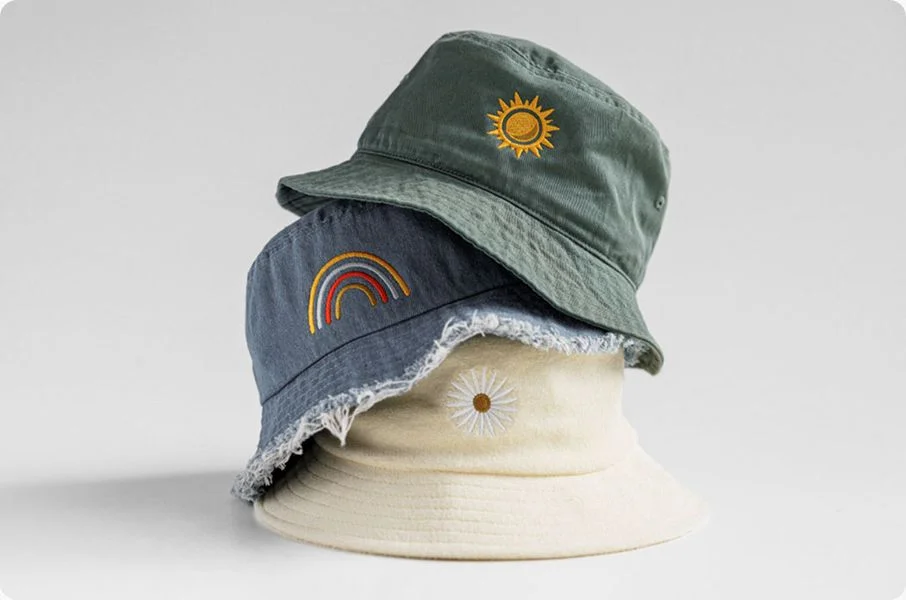
When you sew a name, logo, or symbol into a plain cap or beanie, it changes completely. Custom hat embroidery makes regular caps more personal. You can get a cap with your initials, a beanie that marks a particular trip, or a bunch of branded hats for your business or event.
If done right, it looks clean and purposeful, feels strong, and is something people will truly want to use, not simply a novelty item.
This guide shows you what you can do with custom hat embroidery, how to pick the correct base hat and service, and how to make something that looks great when it’s turned into thread.
Benefits of Custom Hat Embroidery: Why It’s So Popular
Custom embroidered hats are a great way to express yourself, give a present, or promote your brand.
First and foremost, self-expression. Instead of wearing the same logo as everyone else, you may put your initials, a reference to your hometown, or a small symbol that signifies something to you. It might be a modest monogram on a plain dad cap or a little contour of a mountain on a hiking hat that reminds you of a beloved track.
Personalised hats make great gifts since they show you care without being too delicate. A hat with “Dad” and a date, a beanie with the coordinates of a destination you both love, or a hat with an inside joke for a group of friends typically lasts longer than trendy clothes and gets worn a lot.
For small businesses, clubs, and inventors, hats with embroidery on them are like walking billboards. They are cheaper than a lot of other types of merchandise, easy to fit, and can be seen in pictures and everyday life. When your consumers or staff wear them, they show off your brand no matter where they go.
Popular Hat Embroidery Designs That Actually Work
You can digitise almost anything for embroidery, but some concepts always work better than others.
Monograms and initials are always a good choice. One or three letters in a crisp block or script font on the front of a cap or the fold of a beanie reads polished, not loud. It’s discreet enough for daily wear but still clearly yours.
Next are short words and phrases like “Crew,” “Coach,” “Brooklyn,” “On Tour,” or “Since 1994.” These can be names, roles, locations, or mantras. It’s important to keep the words brief because overly long sentences make the letters look like a swirl of thread.
Logos and branded graphics are what make custom hats so useful for businesses. Logos that are simple, bold, and have obvious shapes and not too much little text work best for translation.
Thin lines, microscopic details, or gradients typically need to be made simpler so they can still be read in thread.
Text works well with decorative elements like little icons, location, or dates. A wave icon for surfers, a little coffee cup for a café brand, or coordinates under a city name all offer meaning without making the front page too busy.
You can get custom artwork and portraits, but they look better when they are stylised. Making a clear line drawing from a picture of a pet or breaking a sketch down into blocks of colour frequently works better than trying to embroider a whole picture.
Picking the Right Hat Before You Think About Thread
A flimsy or wrong base hat can ruin even the best design in the world. Baseball caps are the most common choice. Structured or unstructured cotton caps have a smooth front panel with a lot of room. They are good for logos, text, and small graphics, and they may be used for both personal and business purposes.
Soft, unstructured caps with a curved brim, like dad hats, look best with basic, discreet needlework like little wording or a single emblem. Snapbacks and other structured caps look sharper and hold bigger logos better. They look more like “streetwear” and are great for teams or brands.
Beanies are great for when it’s cooler and for simple designs like a word or logo on the folded cuff or a small symbol off to the side. Bucket hats are popular this summer particularly at festivals. They can be placed on the front or the side, but because they are floppy, designs should stay small to avoid distortion.
The material is also important. Cotton and cotton mixes are easy to work with and take stitches well. Technical polyester fabrics can be great, but you need a skilled embroiderer who knows how to keep them from puckering so the design stays flat. Wool blends look nice, but they need to be taken care of and you need to know what you’re doing.
Colour is important for readability. The safest colours are those with a lot of contrast, like white on navy, black on tan, or bright colours on neutral. Tone-on-tone, like black on black or beige on beige, might appear classy, but the designs need to be a little bigger or bolder to be seen.
Understanding the Hat Embroidery Process: From Design to Finished Hat
Knowing how the process works makes it easier to talk to a provider and set reasonable expectations.
Digitisation is the first step. A file for embroidery is made from your logo, text layout, or artwork. This file directs the machine how to stitch, in what order, and how dense each region should be. This is a professional step: a good digitiser will make little changes to the design so that fine lines don’t disappear and curves seem smooth.
After being digitised, the design is put into a commercial embroidery machine. The machine uses the thread colours you choose to run the design, and the hats are held in the right form by special frames. The type of thread (usually rayon or polyester) and how thick it is affect how shiny and soft it is.
Before they do a full batch, most providers will show you a digital mock-up and sometimes a stitched sample. Turnaround usually includes time for getting the design approved, digitising it, and making it, so it’s crucial to prepare ahead, especially for events, launches, or holiday gifts.
The cost usually depends on how many stitches there are (how much area is being embroidered), how many colours of thread there are, and how many items there are. There is often a one-time digitisation fee per design, then a per-hat embroidery cost that drops as your order volume increases.
How to Pick a Service for Custom Hat Embroidery
The perfect service may make a modest design look high-end, but the wrong one can make an expensive hat look cheap.
Local businesses let you examine samples and feel thread, fabric, and construction quality in person. That can be very helpful if this is your first time doing embroidery or if the hats are for anything special like a wedding, launch, or team uniform.
Online platforms are easy to use and usually don’t have any minimums. A lot of them show you a preview right away when you upload a design, and some of them provide blank hats from well-known brands that are decent quality.
Speciality hat stores that also do embroidery are in the middle: they have superior foundation hats and can customise them in-house, which is great if you want something that will last.
When you compare services, look for:
- A collection of embroidered hats that are similar to what you want.
- Clear communication about digitisation, stitch counts, and any extra costs.
- Reviews that talk about more than just how fast the shipping is.
- A validation process that lets you give the design the green light or make changes before it goes into production.
If the price looks too low compared to others, it’s likely because the quality of the hat, the digitisation, or the thread is not as good.
Design Best Practices for Professional Hat Embroidery
There are limits to what embroidery can do. If you remember a few things, you won’t be let down.
Most of the time, simple things appear better. Very fine detail, tiny writing, and intricate shading do not translate well; thread is thicker than ink. Try to make the shapes visible, the spacing comfortable, and the small print as few as possible.
Put hierarchy first. Choose what to read first: the brand name, the initials, or the key word. Then make that part the biggest and most important. You can make supporting details like dates or taglines smaller or relocate them to the rear or side.
Keep colours to a minimum. Usually, two or three thread colours are enough. More colours cost more and make things look messy. If your brand palette is complicated, think about making a simpler version with one or two colours that still feels like your brand.
Think hard about where to put it. A front-center design is clear and strong. Side placements look more modern and modest. Back embroidery is a good way to add a site address, a date, or a small remark. If the parts are related and balanced, using more than one placement (front and side) can look amazing.
Always review proofs.
A digital mock-up illustrates spacing and dimensions. If anything looks too small or out of balance on the screen, it will look worse in real life. If you want to buy a lot of anything, you might want to pay for one tangible sample first.
Ideas for Custom Hats for Every Occasion
If you can’t think of anything, try to think about who will wear the hat and what tale it should convey.
For personal usage, you may make a tiny rotation of caps: one with your initials, one with your hometown or neighbourhood, and one with a small symbol that represents a hobby or passion. A beanie can include the coordinates of a special spot or a short word that signifies something to you.
Think about milestones and roles when giving gifts. “Est. 2025,” “Dad,” “Mama,” or other nicknames are great for new parents or families. Wedding parties often wear hats that say “Bride Squad,” “Groom’s Crew,” or a location and date. These hats make for amusing images and a keepsake.
If you own a small business or are a creator, start with one good logo hat that your employees will like to wear. You can add limited runs later that are connected to events, collaborations, or seasons. Influencers and content creators often wear hats with little channel logos, slogans, or symbols that their fans know to help them stand out visually.
Make sure that designs for events and teams are big and easy to see from a distance in images. A last name and year for a family reunion, a team name and number for a competition, or a simple picture and date for a festival or retreat all work well.
Caring for Embroidered Hats: Maintenance Guide for Longevity
A little basic care will keep your bespoke headwear looking great after you’ve bought them.
Don’t wash your hats in a machine if you can help it, especially structured ones. Instead, use a soft cloth or brush and mild detergent to clean spots. If you have to use a machine, use a gentle cycle, cold water, and a form or cage to retain the hat’s shape. Always let it air dry.
Never tumble-dry structured hats. Heat and tumbling can change the shape of the brims, shrink the fabrics, and mess up the embroidery. If you need to, reshape the brim while it’s still wet and let the hat dry on a flat surface or stand.
When you store it, don’t crush or fold the embroidered parts. Put hats on shelves, hooks or in boxes where nothing heavy can fall on them. This stops the needlework from getting flat and saves the fabric from getting wrinkled.
A bespoke cap or beanie can easily become one of the most worn items in your closet if you make smart design choices, get a nice base hat and hire a decent embroidery provider. It can promote a company, mark a milestone or just tell your narrative in thread.
